


What Is Soy Sauce? The Complete Guide to Asia's Most Popular Seasoning
What Is Soy Sauce?
Soy sauce is a traditional fermented seasoning made from soybeans, wheat, water, salt, and a fermentation culture known as koji. It has been an essential ingredient in Asian cuisine for centuries and is widely recognized as one of the world's most versatile condiments.
Known for its deep savory flavor, soy sauce enhances food by adding umami, balancing sweetness, and bringing complexity to both simple and sophisticated recipes. It is used during cooking, in marinades and sauces, and as a finishing seasoning served alongside many dishes.
Today, soy sauce is a staple ingredient not only in Chinese, Japanese, and Korean cuisine but also in countless international recipes. From stir-fries and noodle dishes to grilled meats, seafood, vegetables, and salad dressings, its ability to elevate flavor has made it a pantry essential around the globe.
The History of Soy Sauce
The origins of soy sauce date back more than 2,000 years to ancient China, where early fermentation techniques were developed to preserve food and enhance its flavor.
Over time, soy sauce spread throughout East Asia, with each country adapting the recipe to its own culinary traditions. In Japan, it evolved into shoyu, while Korea developed its own distinctive fermented soy sauces. These regional variations continue to play an important role in their respective cuisines today.
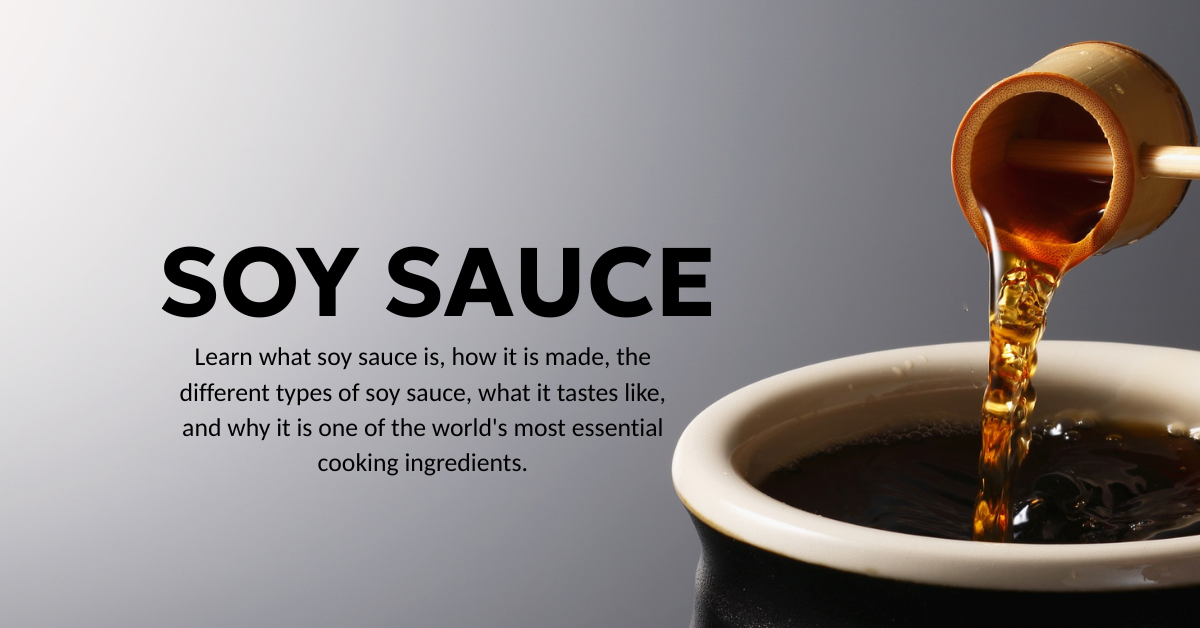
Traditional soy sauce production relied on natural fermentation in wooden barrels or ceramic vessels, where the mixture matured slowly over many months. Although modern production methods have become more advanced, many premium producers still use long fermentation periods to achieve the complex flavor and aroma associated with high-quality soy sauce.
Today, naturally brewed soy sauce is appreciated worldwide for its depth, balance, and remarkable versatility.
How Is Soy Sauce Made?
Authentic soy sauce is produced through a carefully controlled fermentation process.
The traditional ingredients are:
- Soybeans
- Wheat
- Water
- Salt
- Koji (Aspergillus oryzae)
The soybeans are cooked until tender, while the wheat is roasted and crushed. These ingredients are then inoculated with koji, which begins the fermentation process.
Next, the mixture is combined with a saltwater brine to create what is known as moromi, the fermenting mash. Over several months, naturally occurring enzymes break down proteins and starches into amino acids and sugars, creating soy sauce's signature umami flavor and rich aroma.
After fermentation is complete, the mash is pressed to extract the liquid, which is then filtered and pasteurized before bottling.
This slow brewing process is what gives naturally fermented soy sauce its distinctive depth and complexity.
What Does Soy Sauce Taste Like?
Soy sauce has one of the most recognizable flavor profiles in the culinary world.
Its taste is typically described as:
- Rich in umami
- Savory
- Moderately salty
- Slightly sweet
- Mildly earthy
- Complex and well-balanced
The exact flavor depends on the type of soy sauce, its ingredients, and the length of fermentation.
Naturally brewed soy sauce develops subtle aromatic notes that cannot be replicated by chemically produced alternatives, making it the preferred choice for both professional chefs and home cooks.
Why Is Soy Sauce So Important in Asian Cuisine?
Few ingredients have influenced Asian cooking as much as soy sauce.
It serves as a universal seasoning across countless regional cuisines, enhancing everything from soups and stir-fries to noodles, rice dishes, marinades, dipping sauces, and braised recipes.
Rather than simply making food saltier, soy sauce adds layers of savory complexity while highlighting the natural flavors of other ingredients. This ability to create balance is one of the reasons it has remained indispensable for centuries.
Whether used in Chinese stir-fries, Japanese sushi, Korean barbecue, or Southeast Asian noodle dishes, soy sauce continues to be one of the defining ingredients of Asian gastronomy.
Are All Soy Sauces the Same?
Not at all.
Although all soy sauces are based on fermented soybeans, they vary considerably in flavor, color, texture, ingredients, and intended use.
Factors such as the country of origin, the ratio of soybeans to wheat, the fermentation period, and the production method all influence the final product.
For example, Japanese shoyu is generally smoother and more balanced, Chinese light soy sauce is prized for seasoning everyday dishes, dark soy sauce is commonly used to add color and richness, while tamari offers a deeper flavor and is often chosen by people looking for wheat-free or gluten-free options (depending on the product).
Understanding these differences makes it much easier to select the right soy sauce for each recipe.
Is Soy Sauce Healthy?
Soy sauce is made through a traditional fermentation process using simple ingredients such as soybeans, wheat, water, salt, and koji.
It naturally contains amino acids produced during fermentation, which contribute to its characteristic umami flavor.
Because soy sauce is relatively high in sodium, it is generally used in moderation as a seasoning rather than as a primary ingredient.
Its worldwide popularity comes not only from its rich taste but also from its versatility, making it one of the most widely used fermented seasonings in both home kitchens and professional restaurants.